
Energy Systems & Infrastructure
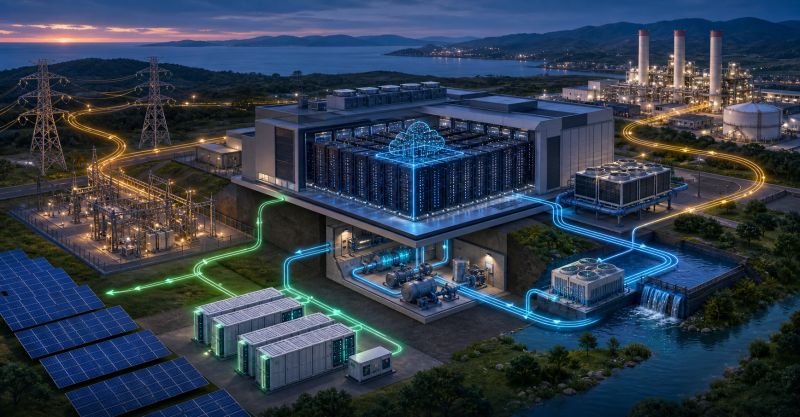
A Data Centre Is Not Just a Digital Project. It Is an Energy System.
In earlier articles, I wrote about why power plants are no longer just about megawatts, how CRESS operates across a shared national grid, and why gas-to-power must be approached through system design rather than isolated agreements.
Data centres may appear to sit outside that conversation. They host cloud platforms, process artificial intelligence workloads and support our growing digital economy.
But before a data centre can process data, the electricity system must deliver power, reliably, continuously and at scale.
That brings data centres directly into the energy conversation.
4.6 GW Is an Energy Number, Not a Digital One
MIDA recently reported that Malaysia has approximately 4.6 GW of data-centre capacity planned or under construction.
On the surface, this represents significant digital investment. To the electricity system, however, it represents a large, concentrated and round-the-clock source of demand.
A data centre does not operate only when the sun shines. Its servers, cooling systems and network equipment must remain available throughout the day.
Generation must be available. Transmission must be ready. Fuel supply must be secure. Renewable energy must be integrated. Battery storage must support flexibility. Cooling and water must also be managed responsibly.
Every part is connected.
Commercial Procurement Is Not Physical Delivery
CRESS can allow a data centre to procure renewable electricity commercially. But as I explained previously, commercial procurement and physical delivery are different things.
Once electricity enters the national grid, it becomes part of a shared system. The System Operator must continue balancing supply and demand in real time, regardless of the contract behind the transaction.
Renewable energy can reduce carbon intensity. Battery storage can manage variability and support grid stability. Gas-fired generation may continue providing dispatchable capacity when variable sources are unavailable.
None works in isolation.
The Questions Worth Asking
This raises important questions. Who should pay for the grid reinforcement required by a large new load? Should data centres remain passive consumers or become active participants through storage, demand response and long-term energy planning?
These are not arguments against data-centre investment. Malaysia should continue attracting high-value digital activity.
The opportunity is to ensure that this growth strengthens the energy ecosystem through renewable development, grid modernisation, storage capability, technical talent and local industry participation.
The question is not simply how many data centres Malaysia can attract.
The better question is: what energy architecture must Malaysia build so that digital growth strengthens, rather than merely consumes, the national energy system?
Design the energy system, not just the data centre.