
Gas Market & Policy
CRESS Has Momentum. Delivery of Green Energy Still Got Option.
Over dinner last night, I spoke with a prospective developer exploring a solar and BESS hybrid project to power a green-fuel plant.
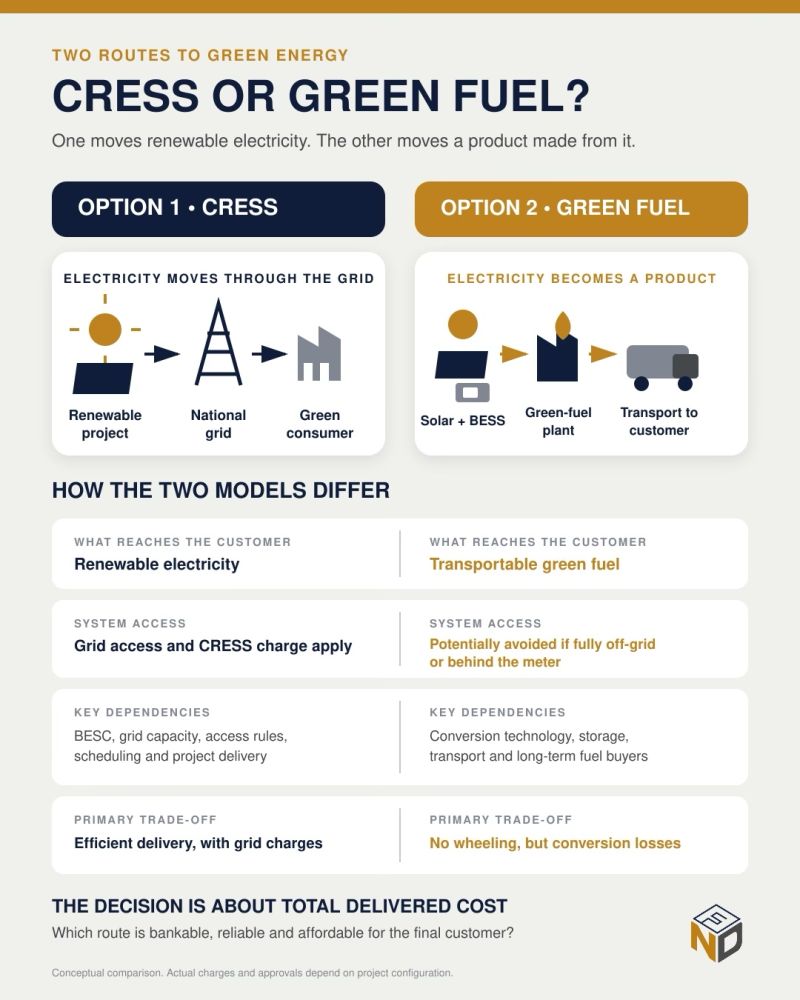
The idea is quite different from CRESS. Instead of sending renewable electricity through the grid, the electricity would be converted into a transportable fuel and delivered to customers.
If the project operates fully behind the meter without using the grid, it may avoid the CRESS system access charge. That does not necessarily make it cheaper. The developer must still manage conversion losses, storage, transportation, technology risks and long-term buyers.
It reminded me that Malaysia’s green-energy market is beginning to explore several pathways.
CRESS itself is gaining real momentum. PETRA has reported 3,148 MW of registered projects involving 11 renewable-energy developers and eight green consumers. That is encouraging.
However, registered capacity is not yet capacity under construction.
The recently announced 680 MW solar and storage project involving Gamuda, SD Guthrie and Gentari is a good example. The projected revenue exceeds RM10 billion over 21 years, but the parties have currently signed a term sheet.
Definitive agreements are targeted for the first quarter of 2027. The project must still secure the necessary approvals, grid-access arrangements and financial close before construction and eventual commercial operation in 2029.
This is genuine progress. It is simply important to describe its present stage accurately.
Perhaps CRESS projects should be tracked through several clear milestones:
Registration → term sheet → definitive BESC → approvals → financial close → construction → commissioning → electricity delivered.
Each milestone tells us something different. Registration shows interest. A term sheet reflects commercial intent. Financial close confirms that capital has been committed. Construction demonstrates execution. Commissioning finally delivers renewable electricity to the customer.
The distinction becomes more important as the pipeline grows. Counting every registered megawatt as committed supply could overstate future renewable delivery, grid requirements and contractor earnings.
Timing matters too. The special CRESS system access charge of 14 sen/kWh requires commercial operation by 31 December 2028. Projects completed later may face different economics unless another applicable arrangement is confirmed.
CRESS is an important reform, and the early momentum deserves recognition. At the same time, behind-the-meter projects, private networks and transportable green fuels may provide other workable routes for certain customers.
The next measure of success should not be registration alone.
It should be how many projects become bankable, reach construction and ultimately deliver affordable green energy to customers.
Free Briefing
Malaysia Gas Market Reform: A Leadership Briefing
The end of the Gas Framework Agreement, Third Party Access, gas shippers and CRESS in one read, with ten questions for your leadership team.
Working Through a Similar Question?
Energy Systems Advisory helps leaders understand how market, regulatory and commercial changes affect the wider gas system before a decision is made.
Newsletter
Get New Insights by Email
Analysis of gas markets, energy systems and strategy, sent when a new article is published.
Or subscribe directly on Substack.