
Career & Reflections
Not Every Contribution Looks the Same
I am writing this from Mecca, where, Alhamdulillah, Allah has granted me the privilege of bringing my mother for Umrah.
Seven months ago, my father passed away on the second day of Eid al-Fitr, following a prolonged illness. For much of that time, my mother was his primary caregiver, supported by my younger siblings who lived nearby. I lived further away. I contributed financially and helped where I could. But I was not physically present as often as I should have been.
That is a truth I have had to sit with. Anyone who has cared for an ailing parent knows that the greatest sacrifices rarely appear on a hospital bill. They are measured in sleepless nights, interrupted routines, quiet anxieties and the relentless demands of caring for someone who can no longer care for himself.
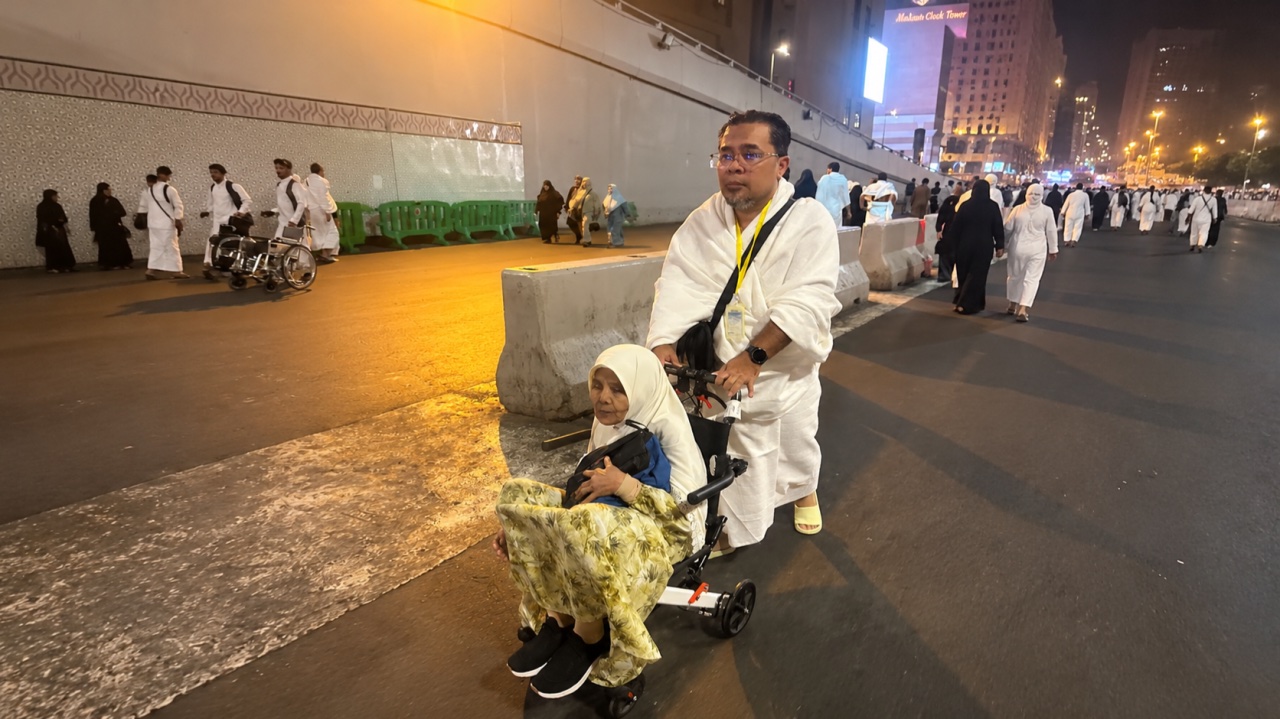
My mother and siblings bore much of that weight. And while I did what I could, I have come to understand an important distinction: contributing to a responsibility is not necessarily the same as carrying its burden. It is a distinction that extends well beyond family life.
In organisations, we frequently speak of fairness as though it means everyone contributing equally. We measure performance, distribute responsibilities and recognise achievements through what can be counted.
Yet human capacity is rarely equal, and neither are the circumstances in which people serve. Some have greater resources. Others have time, physical strength or the ability to remain present when circumstances become difficult.
Some contributions are visible and easily measured. Others are sustained quietly, often at considerable personal cost. To recognise these differences is not to diminish anyone’s contribution. It is to understand that equality of contribution and fairness of responsibility are not always the same thing.
This matters particularly in leadership. A leader who merely counts contributions i.e. KPIs may overlook those carrying the heaviest burdens. A leader who understands those burdens is better placed to distribute responsibilities, recognise sacrifice and build an organisation in which people genuinely support one another.
Fairness, in this sense, is not about demanding the same from everyone. It is about understanding what each person can reasonably give, while remaining attentive to what others have already sacrificed.
I find myself reflecting on this as I watch my mother here in Madinah. After my father’s passing, she observed four months and ten days of iddah, the Islamic waiting period following the death of a husband.
For years, much of her life revolved around caring for him. Now, for a little while, I have the privilege of caring for her. I hope this journey offers her some peace.
It has also reminded me of something we know intellectually but too often fail to act upon: the opportunity to care for our parents is finite. We tell ourselves there will be time when work becomes less demanding, when finances are more comfortable, when our responsibilities ease. But life rarely arranges itself around our intentions.
There are things I wish I had done for my father that I can no longer do. No amount of regret can recover those opportunities.
With my mother, Alhamdulillah, I still have time. I remain deeply grateful to my siblings, whose sacrifices made it possible for me to fulfil my responsibilities from a distance. Their presence carried a weight that my financial contribution could never fully replace.
Perhaps this is ultimately what fairness requires of us, whether in our families, workplaces or communities. Not that we all give the same, but that we recognise what others have given, acknowledge what we could have done better, and remain willing to carry more when the opportunity comes.
Because in the end, the measure of our contribution is not simply what we have given. It is also whether we understood the sacrifices that made our contribution possible.
May Allah have mercy on my father, reward my mother and siblings for all they have endured, and forgive me for where I have fallen short.
Working Through a Similar Question?
These reflections come from 28 years across operations, gas markets, commercial, strategy and technology commercialisation at PETRONAS.
Newsletter
Get New Insights by Email
Analysis of gas markets, energy systems and strategy, sent when a new article is published.
Or subscribe directly on Substack.