
Career & Reflections
Fish Head Curry, Tanah Melayu and the Table We Share
Yesterday, I had fish head curry with friends at Taman Tugu Café, beside Malaysia's National Monument.
But this is not really about what we ate. It is about who shared the table with me.
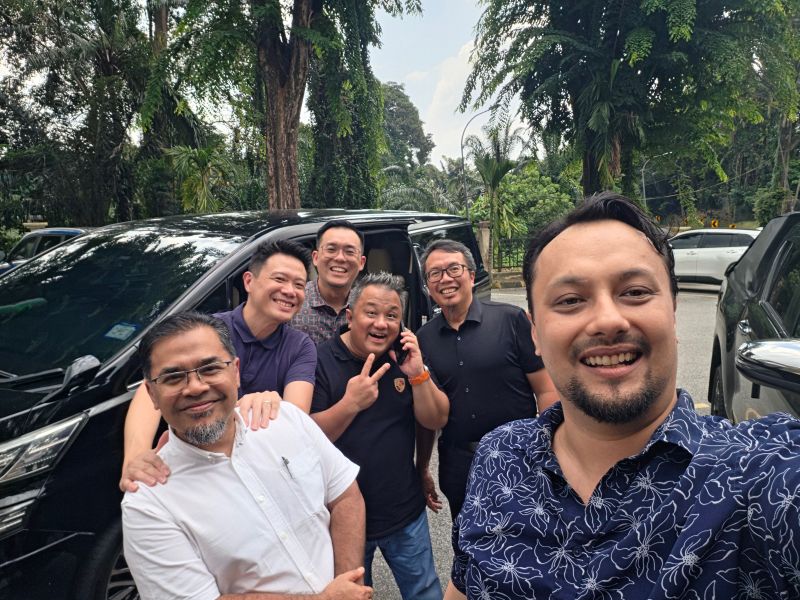
We are colleagues in PETRONAS, working in the same division to commercialise technology. We came from different ethnic and cultural backgrounds, yet worked toward common objectives, navigated disagreements and solved problems together.
Diversity was not a slogan. It was simply part of professional life.
None of us had to minimise our identity to make others comfortable. We respected one another not because our differences disappeared, but because those differences were not treated as threats.
A Question Currently Going Around
That made me reflect on a question that is currently viral in Malaysia: why does the term Tanah Melayu so quickly invite accusations of racism?
Perhaps we have begun to confuse equality with historical sameness, as though a shared country can only be fair when every community has precisely the same historical relationship with it.
But citizenship does not require identical histories.
Malaysia did not emerge from a vacuum.
Before Malaysia was formed in 1963, the Federation of Malaya, Persekutuan Tanah Melayu, had already achieved independence in 1957. Sabah and Sarawak then joined Malaya to form Malaysia.
Recognising this sequence does not diminish Sabah or Sarawak. Their participation made Malaysia possible. Nor does acknowledging the history of Tanah Melayu diminish the citizenship of other Malaysians.
These truths can coexist.
Malaysia is our shared national home. Tanah Melayu is one of its foundational historical roots. Sabah and Sarawak are founding partners without whom Malaysia would not exist.
A MyKad answers one question: who is a citizen today?
History answers another: how did this nation come into being?
We need both.
Unity Does Not Require Amnesia
A Chinese or Indian Malaysian does not become less Malaysian when the history of Tanah Melayu is acknowledged. Equally, a Malay should not have to become historically anonymous to prove acceptance of diversity.
Unity does not require amnesia.
The stronger form of pluralism is not one in which every history is flattened until no distinction remains. It is one in which we are secure enough in our identities to recognise the histories of others without feeling excluded by them.
That was what our lunch table represented.
We did not have to become identical before we could sit together. We needed respect, confidence and the maturity to accept that people may arrive at the same national table through different historical journeys. (I arrived so late yesterday, sorry guys 😅)
Malaysia does not need to choose between historical memory and a shared future.
We need the maturity to hold both.